

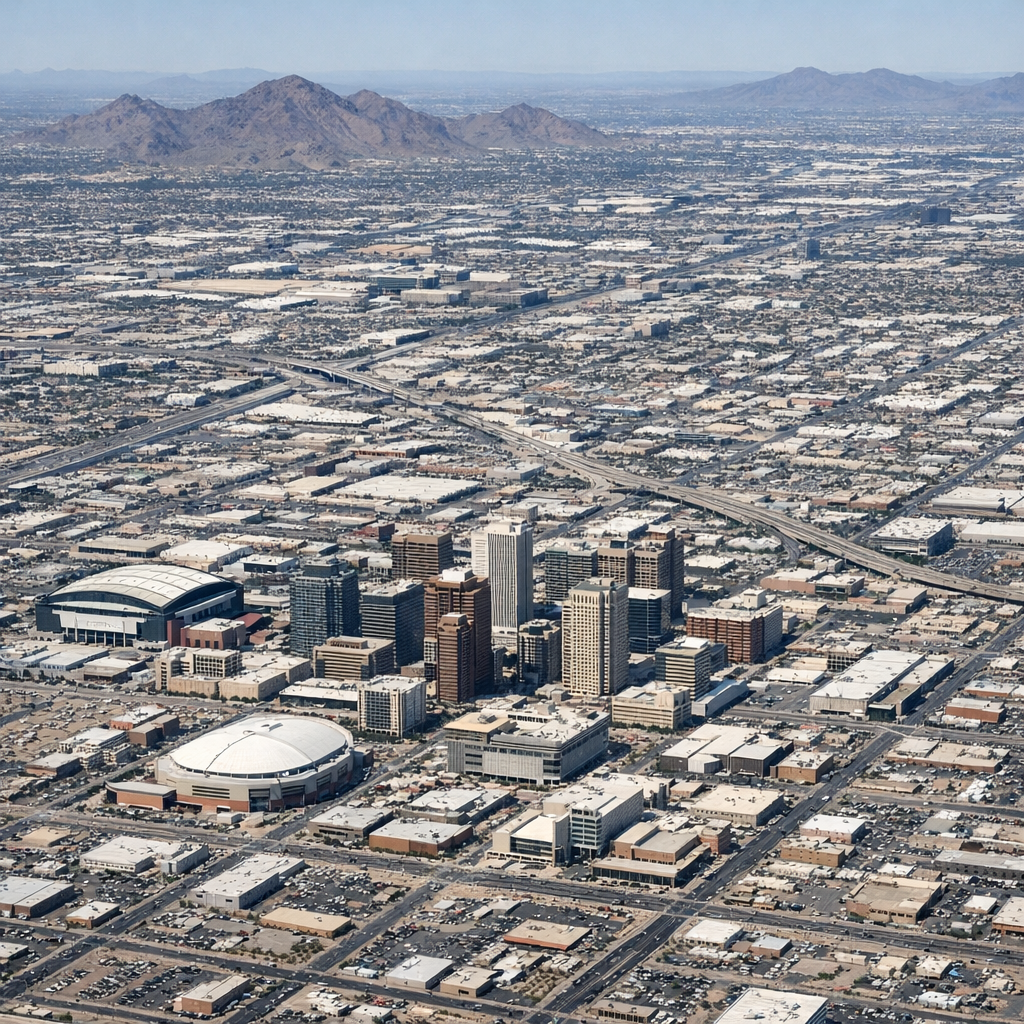
Phoenix, known for its scorching summers, faces an additional challenge: the Urban Heat Island (UHI) effect. This phenomenon causes urban areas to experience higher temperatures than their rural surroundings, primarily due to human activities and infrastructure.
What is the Urban Heat Island Effect?
The UHI effect occurs when urban structures like asphalt, concrete, and buildings absorb and retain heat during the day, releasing it slowly at night. This process leads to elevated nighttime temperatures in city centers compared to outlying areas. In Phoenix, this temperature difference can be as much as 10°F to 14°F between the city center and surrounding rural regions.
Factors Contributing to UHI in Phoenix
Several factors amplify the UHI effect in Phoenix:
- Urbanization: Rapid expansion and development replace natural landscapes with heat-absorbing materials, increasing surface temperatures.
- Vegetation Loss: Reduction in green spaces diminishes natural cooling through evapotranspiration.
- Infrastructure Materials: Common urban materials like dark asphalt and concrete have high heat retention properties.
Impacts on the Community
The intensified heat due to UHI has several implications:
- Health Risks: Increased temperatures can lead to heat-related illnesses, especially among vulnerable populations.
- Energy Consumption: Higher temperatures result in increased use of air conditioning, leading to higher energy bills and greater strain on power grids.
- Environmental Concerns: Elevated temperatures can affect local ecosystems and contribute to poor air quality.
Mitigation Strategies
Addressing the UHI effect requires a multifaceted approach:
- Enhancing Green Spaces: Planting trees and creating parks can provide shade and promote cooling through evapotranspiration.
- Cool Roofing and Pavements: Utilizing reflective materials for roofs and pavements can reduce heat absorption.
- Urban Planning: Designing cities with heat mitigation in mind, such as incorporating green roofs and reflective building materials.
By understanding and addressing the factors contributing to the UHI effect, Phoenix can work towards creating a more comfortable and sustainable urban environment for its residents.