

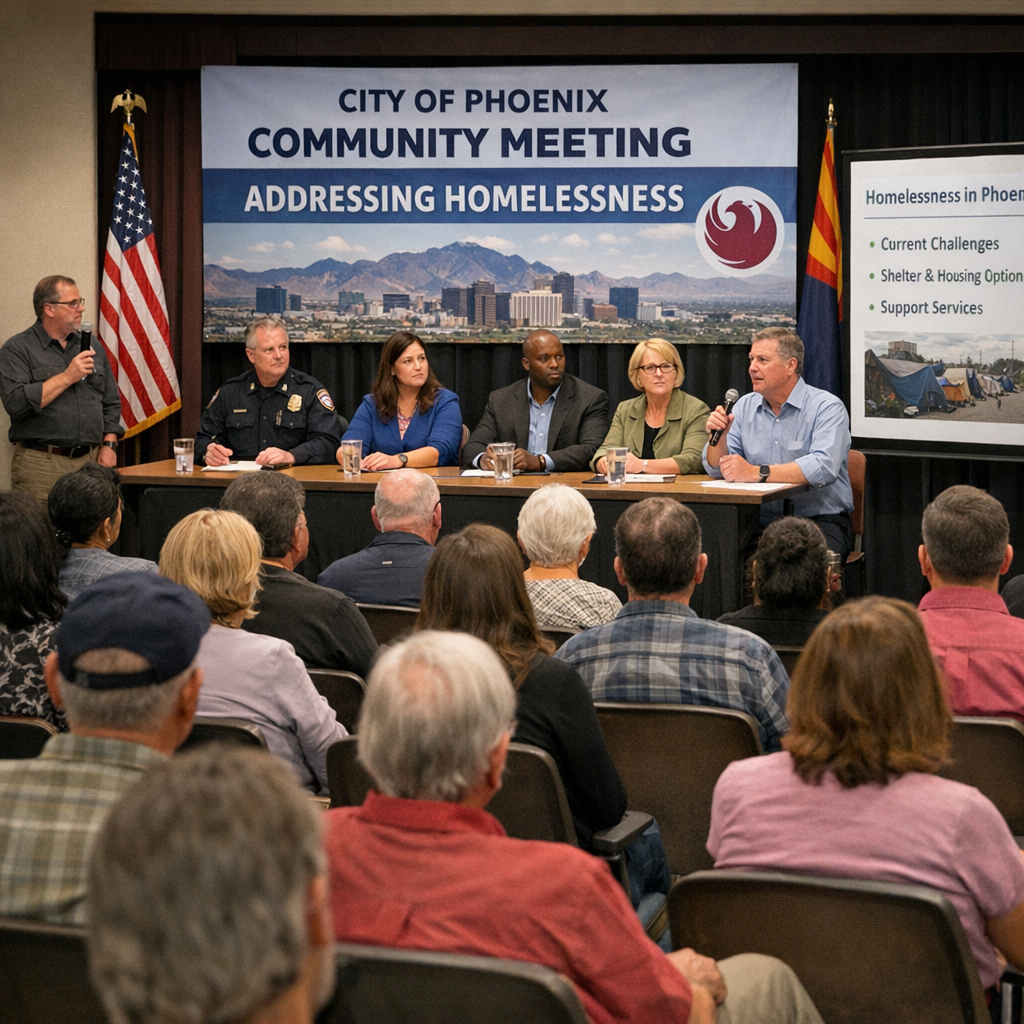
In a recent move, the Phoenix City Council approved the Safe Medical Treatment in Parks Ordinance (G-7467), which prohibits the distribution of food, water, and medical care to individuals experiencing homelessness in city-owned parks. This decision has ignited a robust debate among residents, advocacy groups, and city officials regarding the balance between maintaining public spaces and providing essential services to vulnerable populations.
Understanding the Ordinance
The ordinance, passed with a 6-3 vote, aims to regulate activities in public parks by restricting unauthorized aid distribution. Proponents argue that this measure is necessary to preserve the intended use of these spaces and address concerns from park-goers about safety and cleanliness. They emphasize that organized events and services should be coordinated through appropriate channels to ensure order and compliance with city regulations.
Community Response
Opponents of the ordinance, including various non-profit organizations and community members, express concern that these restrictions will hinder efforts to assist those in need. They argue that public parks have historically served as accessible venues for outreach programs, especially for individuals who may not seek help elsewhere. Critics fear that limiting aid distribution could exacerbate the challenges faced by the homeless community and strain the resources of organizations dedicated to providing support.
Broader Context
This ordinance is part of a series of actions taken by the city to address homelessness and the use of public spaces. Previously, the city cleared “The Zone,” a large homeless encampment in downtown Phoenix, leading to a significant increase in the unsheltered population as individuals dispersed to other areas. The closure highlighted the complexities of managing homelessness, balancing public safety, and providing adequate support services.
Looking Ahead
As Phoenix continues to navigate these challenges, the city emphasizes its commitment to developing comprehensive solutions that address the needs of all residents. This includes exploring alternative locations for aid distribution, enhancing shelter capacities, and implementing programs aimed at long-term housing stability. The ongoing dialogue between city officials, service providers, and the community remains crucial in shaping policies that are both effective and compassionate.
Residents are encouraged to stay informed and participate in community discussions to contribute to the development of strategies that reflect the diverse needs and perspectives of Phoenix’s population.